
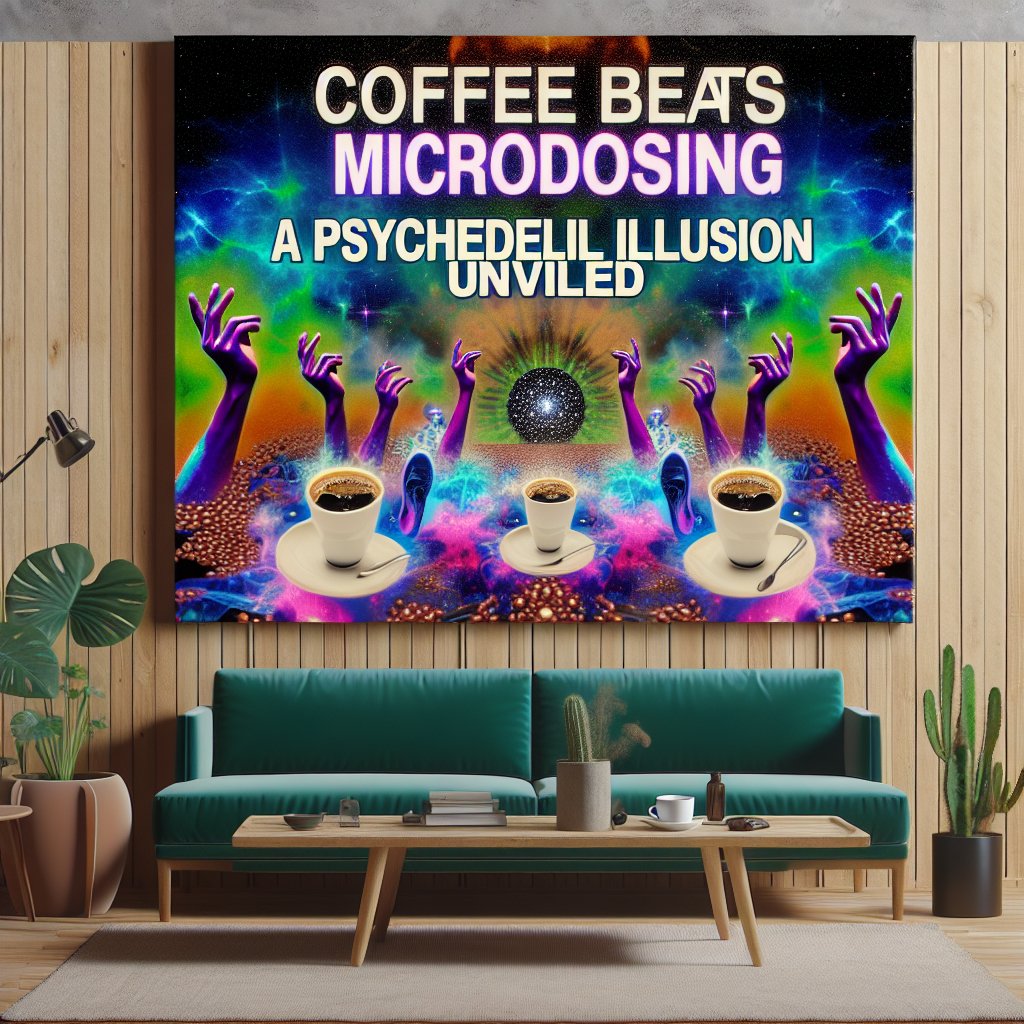
The Microdosing Mirage
In the realm of Silicon Valley biohacking, microdosing emerged as a peculiar trend blending mental health and psychedelic experimentation. Promoted as a subtle enhancer, microdosing involves ingesting minuscule amounts of psychedelics like psilocybin or LSD. Proponents claimed it offered a myriad of benefits, from mood elevation to increased focus, without the overwhelming hallucinations. Yet, this psychedelic Swiss Army knife narrative may be more illusion than reality.
As anecdotal evidence mounted, microdosing was hailed as a panacea for modern woes, particularly depression. However, skepticism lingered. Could a fraction of a psychedelic dose truly transform mental health? Recent research from MindBio Therapeutics challenges this notion, suggesting the benefits of microdosing may be overhyped, especially for clinical depression.
The Study: A Placebo Revelation
MindBio Therapeutics, an Australian biopharma company, conducted a pivotal Phase 2B trial involving 89 adults with major depressive disorder. The study aimed to assess the efficacy of microdosing LSD against a placebo. Over eight weeks, participants’ depression symptoms were evaluated using the Montgomery-Åsberg Depression Rating Scale (MADRS), a respected tool in clinical settings.
The results, though unpublished, were shared by MindBio’s CEO Justin Hanka. Contrary to the microdosing hype, the study revealed that patients receiving microdoses of LSD showed less improvement than those given a placebo. This placebo wasn’t just an inert sugar pill; it was an active placebo—a caffeine pill—chosen for its psychoactive properties that could mimic expected effects.
Hanka touted the trial as the most rigorous placebo-controlled study in the microdosing arena. The findings suggest that the anticipated benefits of microdosing may, in fact, be placebo-driven, raising questions about the true efficacy of this trend.
Psychedelic Promises vs. Reality
The allure of microdosing lies in its promise of enhancement without the trip. Yet, MindBio’s findings indicate that such promises may be more about expectation than actual pharmacological effect. The active placebo used in the study, caffeine, is a stimulant known to improve mood and alertness, potentially skewing perceptions of microdosing’s effectiveness.
This revelation underscores a broader issue in the psychedelic renaissance: the power of expectation and the placebo effect. As the psychedelic industry expands, fueled by venture capital and corporate interests, distinguishing genuine therapeutic potential from placebo-induced perception becomes crucial. The MindBio study serves as a cautionary tale against overreliance on anecdotal success stories.
Rethinking the Biohacking Frontier
The implications of MindBio’s study extend beyond microdosing, challenging the biohacking community’s reliance on unproven methods. As individuals seek alternative treatments outside traditional pharmaceuticals, the need for rigorous, unbiased research becomes paramount. Blind faith in unverified practices can lead to misplaced hope and potential harm.
In a world increasingly dominated by tech-driven solutions, the microdosing narrative is a reminder of the importance of evidence-based approaches. While the quest for mental health solutions continues, the intersection of technology, psychedelics, and biohacking must be navigated with caution. As this study suggests, sometimes the simplest solutions, like a cup of coffee, may outperform the most hyped innovations.
Meta Facts
- •💡 MindBio’s study used the Montgomery-Åsberg Depression Rating Scale (MADRS).
- •💡 The study involved 89 adults with major depressive disorder.
- •💡 Active placebos like caffeine are used to mimic expected psychoactive effects.
- •💡 Microdosing LSD showed worse MADRS scores than caffeine placebo.
- •💡 Rethinking biohacking trends is crucial for evidence-based mental health solutions.